
Mindfulness for modelling – Look after yourself – its just a hobby
In this post, I’ll look at how the craft-based activities of model-making can be a tonic for these uncertain volatile times, and how now more than ever, we need to care for our mental well-being and that of others too.

Anxious crafting: Modelling in a time of wellbeing
Here’s some thoughts on my own journey, and a varied approach to care. Hopefully, this might resonate with you.
As an aside, its apparent that the increased global cost of living is an added stress and that our collective model hobbies are under some considerable pressure.
So that was then. . .
Five years ago in a fit of anxiety and frustration, I packed my ‘part baked big idea’ model-making efforts into several unmarked boxes.
“That’s it!” I said, “I can’t be bothered with all this dodging through the model flak anymore, I don’t need tension to relax”.
It’s not the first time I’ve walked away from my hobby. Doing this is at once a liberating, yet singularly isolating experience, but this ‘packing it all up’ thing is not to be confused with giving up or being all petulant and going offline for a while in a huff either when folks don’t ‘like’ your stuff online.
It’s not about being ‘hardcore’ or ‘staunch enough’ to tough it out when the subject interest inevitably fades either. No, the hobby stuff had to be packed up for its own good as well as that of my own well-being.
You see the styrene thing had stopped being rewarding, it had gone from being enthralling, exciting, and joyous, to not even holding my interest. There was precious little fun factor going on either.
In reality, these are all classic signs of depression and should be taken seriously.
Feb 2025 update: There’s another post which follows this up to describe my personal journey and the end of my styrene hobby which started in 1975.
Perhaps fun isn’t the word – is modelling mostly fun, or is it infuriating – Funriating?
Regardless, there were other forces at work here in addition to the cyclical – ‘chap buys expensive cardboard box, chap opens box inhales fresh styrene, gets giddy then fidgety, hacks off the bits he likes (ignores dense/complex instruction sequence) glues bits together, gets distracted/disheartened/spills glue-paint, sees another unopened box of delights, ‘squirrels!’
And so it goes. . .
On balance, yes, it’s probably still fun-ish, but it’s also a risky febrile enterprise that seems to be increasingly competitive, even when it’s trying hard not to be.
Modellers and the art of humblebragging
So yeah, we try so hard to be unassuming and modest (while showing the world our state of the art model making workstations/semi-pro photography studio//latest jaw-droppingly expensive kit-resin acquisitions. . .) while still subliminally being competitive.
It’s not ‘in your face’ competition, but more a whispery “Here’s my latest esoteric obscure thingy – it’s not my best – but you probably don’t know what it is, so give me likes anyway” passive/aggressiveness, while simultaneously sticking it to the other esoteric thingy builders out there who weren’t quick enough to post their esoteric thingy first.
“Look upon my perfectly rigged Boulton-Paul Sidestrand ye sticky-fingered slow modellers and despair!”.
Dial down the dis there old chap
Scale model making, like other hobbies, can positively impact our well-being and serve as a valuable tool for managing anxiety and stress. We all know that engaging in creative activities can provide a sense of accomplishment and relaxation, relieving pressure from daily worries.
But modelling, especially that subliminal obsessive-compulsive competitive side, can also be a source of stress all by itself. Without even trying some days.
Danger danger, high voltage
So how might we manage that? Well knowing what the warning signs are, and how it all needs to be dialled back a bit or switched to mute before it gets to this point is an essential skill in itself.
Spot the signs: Model making of any flavour is usually situated around historical terms of reference (even the sci-fi stuff has a quasi-invented history of its own) and often follows a need to replicate something that is either long gone or remote and inaccessible. So it is an opportunity to enter or even retreat into another world, or that historical past in miniature as we might imagine it to have been.
Spending time here is good, too much time though, not so good.
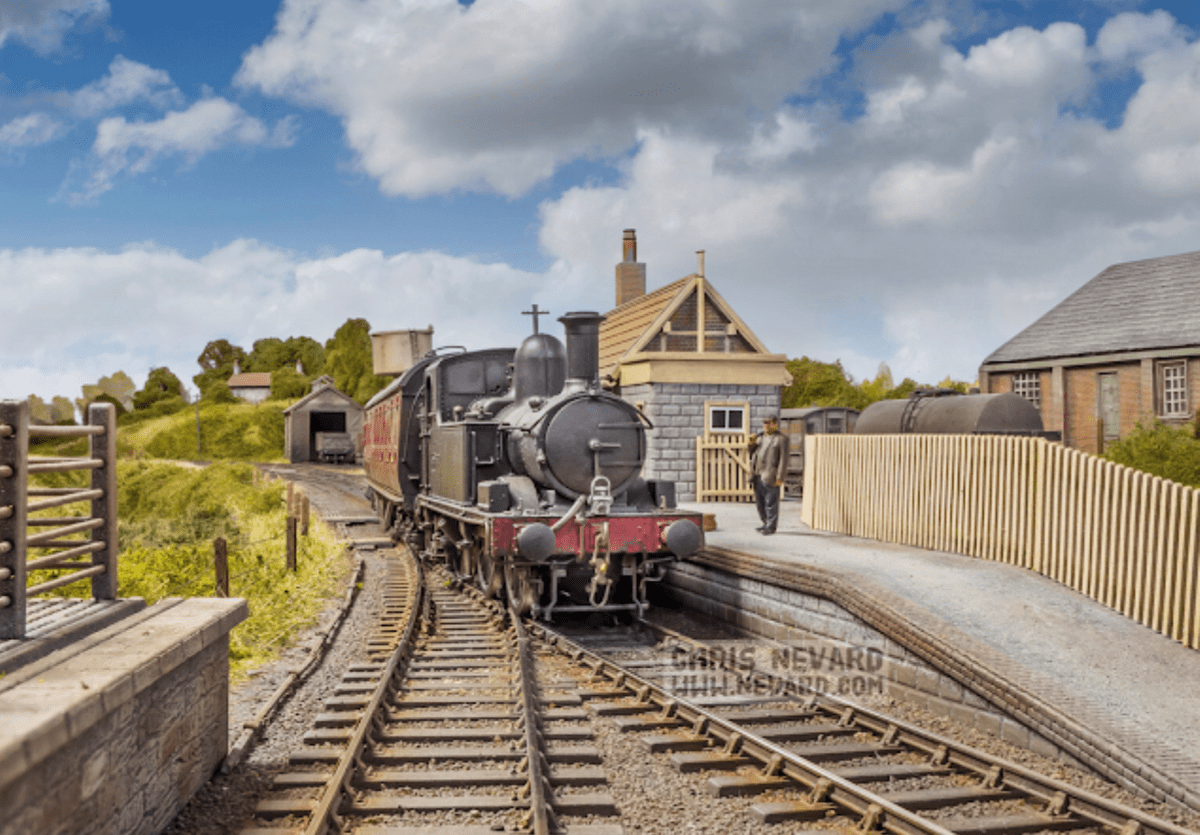
Model railways are great examples of this safe other world – (the photo below is Hemyock – one of Chris Nevard’s delightful miniature worlds and an example of his superb model photography too – check out his blog even if you don’t have any interest in model railways – it’s a joyful irreverent place).
Railways in particular are miniature part-imagined environments, views of an age where everything was supposed to work slightly better – or that’s at least what we like to believe – the non-standard rose tinted analogue yesteryear we long for (but in our hearts we know never quite existed in the way we imagine – Anemoia: nostalgic longing and the impossibility of return).
On the other hand: there’s a metaphorical line that’s about to be crossed between a mostly healthy, engrossing positive interest, but which thanks to a social media dopamine hit, is starting to become an unhealthy negative obsession where an extended ‘mental existence’ in a minature past overruns our everyday life tasks.
With the result that engaging with others on the now obsessive/compulsive subject of model making and arguing about its historical accuracies and correcting others with a display of superior knowledge on obscure details leads to confrontation – both with our own limitations and those of others. Fisticuffs ensue.
What to do, what to do?
Mind the gap
Mindfulness. Mindfulness often gets a bad rap and is sometimes derided for its alternative cultural, spiritual or secular arcane origins. Plus all that modern blatant hipster commercialism as entrepreneurial types see opportunities to cash in on oddly scented candles doesn’t do it any favours either.
Anyway, empirical research has shown that practising mindfulness regularly can have a range of benefits, including reduced stress, anxiety, and depression, improved attention and focus, increased emotional resilience, and enhanced overall well-being.
It can also promote a greater sense of self-compassion and empathy towards others.
One of the positive benefits of model-making is its ability to facilitate mindfulness without really trying too hard. It already requires concentration and attention to detail, allowing us to immerse ourselves in the present miniature moment.
This mindful modelling state can be meditative and calming, reducing anxiety and promoting a sense of inner peace.
Modelling can also empower us by fostering a sense of achievement and mastery and we have control over the process too, from selecting the materials to the level of intricacy and detail. This sense of autonomy can boost self-esteem and confidence, providing a positive impact on mental well-being.
Another aspect of model-making is the opportunity for chosen social interaction, both on and offline. In a post-pandemic world where people may have varying levels of comfort and different opportunities to interact in person, social media platforms play an altered pivotal role.
Just what that might look like with the advent of AI is anyone’s guess, but one thing is certain, the world and our part in it as hobbyists and model makers is not the same as it was.
It never will be again, but some aspects of the ‘old ways-old days’ should be kept in mind, and perhaps (re)applied to our altered lives.
Social media platforms primarily provide a space for hobbyists to connect, share their work, and engage in discussions with like-minded individuals from all around the world. Like a model show on ‘roids, this truly global online community can, or rather should, offer support, inspiration, and valuable feedback. It often fails to do this – largely due to its limitations of communication and opportunities to say things that we would hesitate to express in a face-to-face or organic way.
It is important, though, for individuals to consider others’ ability to function as they once did before the pandemic. Many people face challenges relating to ongoing mental and physical health, and it is essential to do all we can to create and support an inclusive and supportive environment.
Kindness and kind words are free, and valid as long as they are given with real intent.
While social media interaction can be beneficial, it is crucial to use these platforms mindfully. Excessive comparison or seeking validation solely through social media can be damaging to our well-being.
Now more than ever, it is important to strike a balance between online and real-world experience.
Setting limits, practising self-care, and being aware of the potential negative impacts of modelling via social media can help ensure a healthy relationship with online communities and the folks who ‘live’ there.
Six strategies for coping
That’s fine but how do we deal with the dark days or the social media pile-on comments – those heavy words lightly thrown situations – how do we cope?
Mindfulness is a powerful mental health strategy that can be incorporated into scale model-making (or any other creative arts and/or crafts) hobby. Here are a few specific examples of how mindfulness can promote well-being:
- Focus on the present moment: Engaging in model-making requires concentration and attention to detail. In themselves, these can be tiring and even exhausting if overdone. By immersing ourselves fully in the task at hand, but recognising that we have endurance and concentration limits, and by practising stopping before reaching that limit, we can practice mindfulness by focusing on the present moment rather than getting caught up in worries about the past or future. We can apply this to the build process so that the natural anxiety around process, skill level, finishes and a host of other things that we tell ourselves we are not very good at can be managed. Back off a bit, don’t switch off altogether just yet.
- Deep breathing and relaxation: Mindful breathing exercises can be incorporated into our hobby time. Take slow, deep breaths while working on the model, paying attention to the sensation of the breath entering and leaving your body. This simple practice can help calm our nervous system and reduce stress.
- Non-judgmental awareness: When working on the model, try to cultivate a non-judgmental awareness of our thoughts, feelings, and sensations. Rather than labelling them as good or bad, simply observe them without getting carried away by them. This approach can foster self-acceptance and reduce self-criticism which is often a major roadblock to improvement.
- Engaging the senses: Pay attention and reconnect to the basic sensory experience of model making. Step back occasionally and notice the texture of the materials, the sound of tools, and the smell of fresh styrene (I’m not kidding, that first new box opening can be special and release a world of sensory olfactory joy!). Absorb the details before rushing into the next phase. By fully immersing ourselves in these sensory experiences, we can enhance our mindfulness practice and promote a sense of calm and presence.
- Embracing imperfections: Instead of striving for perfection in our scale model, practice mindfulness by accepting and embracing imperfections. Recognise that imperfections are a natural part of the creative process and can even add character to our work. Cultivating a non-judgmental attitude towards imperfections can reduce anxiety and perfectionistic tendencies. Getting it right (or better) next time is the ideal, it’s not the end of the world if it doesn’t happen.
- Gratitude and appreciation: Take a moment when building to express gratitude for the opportunity to engage in the hobby. This sounds a bit left-field and if that’s your thing, well all power to you, but on a simple level it can just be being thankful and recognising that. Reflect on the positive aspects of the activity and appreciate the joy and relaxation it brings us. Practising gratitude can shift our focus towards the positive and cultivate a more optimistic mindset.
Incorporating mindfulness into our scale model-making or any other hobby is a personal journey. Explore different techniques, be patient with yourself, and find what works best for you.
The key is to bring a sense of presence, acceptance, and self-compassion to our hobby time, ultimately promoting good mental health and well-being.
Keeping that social media raygun trigger on ‘safe’
While social media can be a valuable tool for connecting with other enthusiasts and sharing our work, it can also contribute to stress and anxiety if not used mindfully. Here are some aspects to consider and strategies to minimise stress related to social media:
Comparison and Perfectionism: Social media platforms often showcase impressive scale models created by highly skilled hobbyists. This can lead to comparison and feelings of inadequacy, triggering stress and anxiety. Remember that what is shared on social media represents a highlight reel and not the full reality (these expert master modeller dudes make furcup models too, and more than they are keen to admit to).
Avoid falling into the trap of comparing our work to others and focus on our own progress and enjoyment of the hobby. It’s not a competition (that race to complete 20 kits in a year to be worthy in the eyes of others) or a headlong rush towards unattainable perfection either.
Strategy: Cultivate a healthy mindset by reminding ourselves that everyone has their own journey and skill level. Instead of comparing, seek inspiration from others’ work and appreciate the diverse talents within the community.
Remember that our enjoyment and personal growth in model-making matter more than some external validation.
Validation and Feedback: Social media platforms exist for the dopamine loop hit of likes, comments, and followers. Seeking validation solely through these metrics can be stressful and lead to dependency or even addiction to external affirmation (the ‘attaboy’ mentality). Additionally, receiving negative or critical feedback can be disheartening, damaging to mental health and impact our self-esteem.
Strategy: Shift our focus from external validation to internal satisfaction. Remind ourselves that the primary purpose of scale model-making is personal enjoyment and growth.
Seek feedback and engage in discussions with fellow hobbyists on our terms, but remember to approach it with an open mind and take constructive criticism as an opportunity to learn and improve.
Time Management and Distraction: Social media can be a significant source of distraction, consuming excessive time that could be spent on scale model making or shopping with our significant other, fixing the shed or huffing an old jar of electric smoke (it’s a thing). Losing track of time while endlessly scrolling through feeds can lead to stress and frustration due to reduced hobby hours productivity.
Strategy: Set clear boundaries for social media usage. Establish dedicated periods for engaging with online communities while ensuring the majority of our hobby time is focused on actual modelling.
Consider using productivity apps or timers to help limit our social media usage and maintain a healthy balance between online engagement and hobby-related activities.
Cyberbullying and Negativity: Unfortunately, social media platforms can sometimes harbour negativity, including cyberbullying and harsh personalised criticism. Experiencing such negativity can be deeply hurtful and negatively impact mental well-being.
Strategy: Prioritise our mental health and well-being by actively curating our social media experience.
- Unfollow or mute accounts that consistently allow negativity or engage in toxic behaviours.
- Surround ourselves with supportive and positive individuals who encourage growth and constructive discussions.
- Participate in online communities that foster a safe and inclusive environment.
- Well thought-out and well-written critique is still best – give and receive it wisely online – write – read – read again – have a cup of tea and either post or delete.
In summary, social media can be a double-edged sword for model-making. While it offers opportunities for connection and inspiration, it can also contribute to our daily stress and anxiety.
By practising mindfulness, setting personal boundaries, and prioritising your mental well-being over the activity itself or the need to constantly engage with the online modelling milieu we can minimise the negative impacts of social media and create a positive and supportive online experience for all our scale journeys.
Kia kaha, noho kaha, be well and be kind to yourself and others.
Images
Hemyock – Nevardmedia http://nevardmedia.blogspot.com/
Stanley Unwin – Getty Images 1966 Popperfoto.
 Scale in Focus