
Digging up an old 1/32 Hasegawa P-51D build
Fresh from an excursion to the kitchen in search of that last (and probably stale) HobNob saw me passing the telly and being distracted by a documentary about ‘Friday Night Lights’ – perhaps better known as an NBC Netflix drama series, the factual documentary was about a particularly American sports event where folks go off to watch high-school football in the dark (that quaint North American rugby-esque thing, not footie) at stadiums whose imposing structure usually doesn’t corelate to the size of the place or its population.
A fascinating insight into communities in rural America – what was it that John Mellencamp sang about small towns?
Anyway, I had a hmm and appropriated the title as a play on words for my series of occasional and short(ish) five min read blog posts. . .
Friday night lites
This is the first in a series of posts which wander aimlessly like mendicant cats in search of tasty things to plunder.
The first one has raided the internet from 2004, while others may revisit some part-baked half-arsed kit builds from the box of doom circa 2016 – 21. (Beaufighter and French He162)
Come with us now on a journey to 2004
The first of these posts is retrieved from Large Scale Planes which I occasionally contributed to back in the day.
You can read the full article and the trials and tribulations of hacking up an old kit from the link.
2004 was a bit of an pivotal year for me and my on-off-on obsession with miniature effigies of killing machines became almost permanently off.
It’s been 21 years of wrestling with the moral ethics of replicating machines which were designed with but one purpose in miniature.
Several attempts to resolve this over the years have tried to countenance the murderous aspect of these quite beautiful, quite horrible devices with various excuses such as the machine aesthetic, classic design, historical exigencies of war and the drive to improve technology, yada yada. . .you know how it goes eh?
This has now resolved itself and I no longer make models. See my other posts.
So that was then, but how soon is now?
The reason behind building the 1/32 Hasegawa Mustang back then was simple – it was to be a straightforward build, no fuss, no expensive extras – a ‘classic kit’ with few vices and cheap as chips. In essence, something supposedly easy and non-Luftwaffe after two and a half years of modelling inactivity.
Plus it was also the only game in town (if we ignore the stone-age Revell P-51B) and a bit clunky-chunky if truth be told, definitely not cutting edge. But hey, we hadn’t seen such riches as Tamiya or Zoukei-Mura or even the Revell low-fi D back then and either practiced the dark art of ‘scratch building’ or put up with these things.
That’s slightly unfair to Hasegawa, and todays multi-million dollar industry has serious R+D investment, mould technologies, and outsourced global production and supply streams which mean eye-wateringly good, properly accurate and superbly detailed models are the norm (and expensive but that’s another can to be kicked down the road).
Short fuse Sallee
My personal reasons for building a particular model are (or rather were) based on its human story and context, and the fact that it looks aesthetically ‘iinteresting’ – So from the outset, I had intended to model a blue-nosed Mustang flown by Lt.Col Richard E Turner CO of the 356th FS.
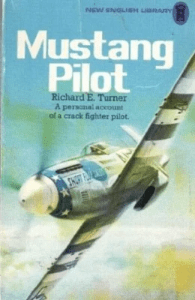
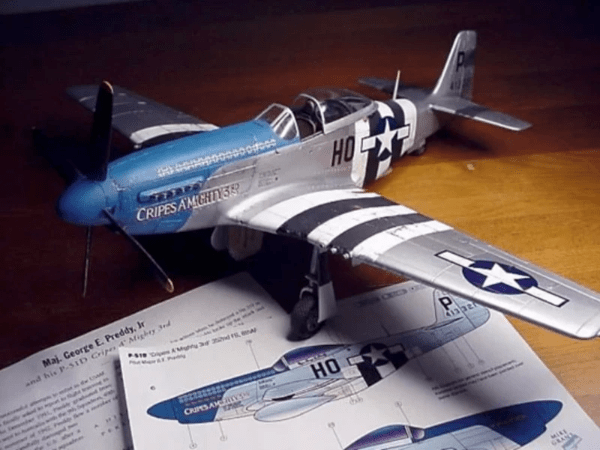
I read Turner’s memoir as an impressionable lad in the late 70’s and fast forwarding to 2004, remembered the cover of his book and his Mustang, ‘Short Fuse Salee’ in its markings of a blue noseband/spinner and white stars as a really cool looking subject. However, a lack of references and available decals at the time (remember, the splinternet was still emerging from its primordial soup of ones and zero’s) for this aircraft, led me back to a more famous blue ‘stang – that of George ‘Ratsy’ Preddy and his P-51D as it appeared around the summer of 1944.
Pictorial
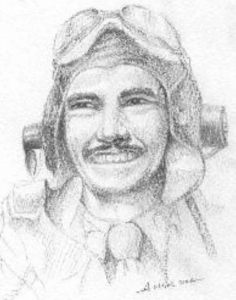
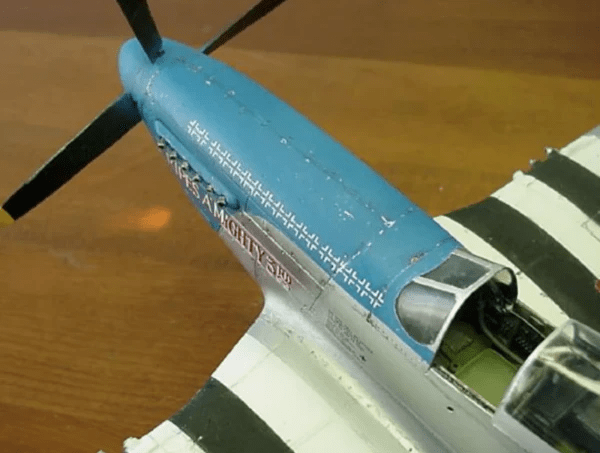
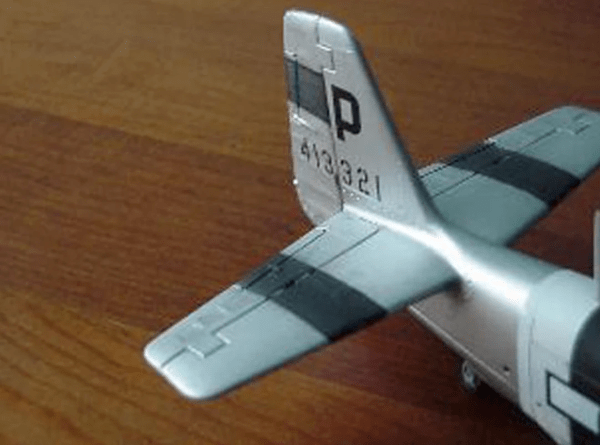
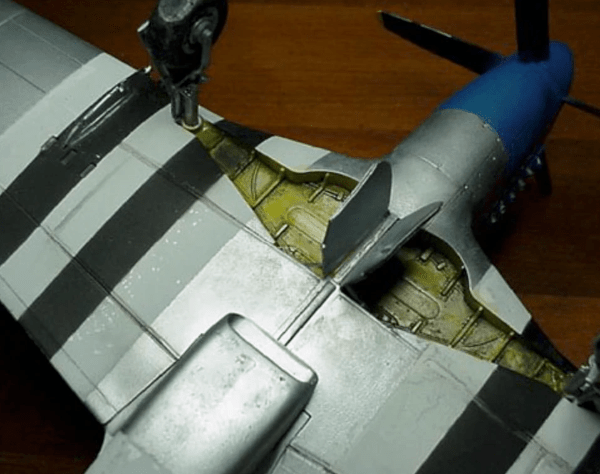
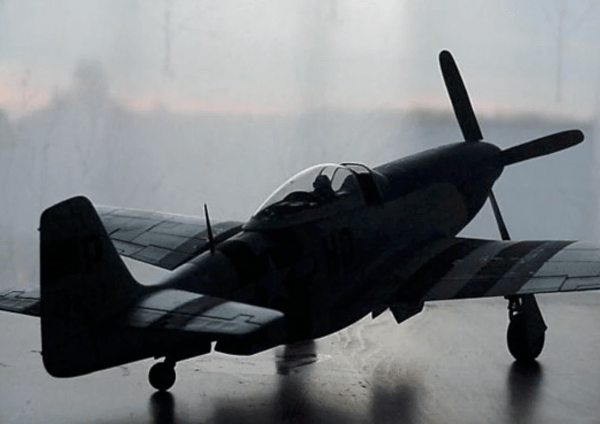
Rather than bang on interminably in a blow-by-blow account of the history of the P-51, (I do wish others would stick to the model making script and avoid regurgitating Wikipedia) and the build, and in keeping with the blog title, here’s a selected series of images retrieved from the legacy LSM site article plus a portrait sketch I did of George.
“So it goes, so it goes. . .”
Gosh, well that was a blast from the past.
All images copyright aviagrafik 2025.
 Scale in Focus